Overview
Token allocation data is often inconsistent, with projects using non-standard labels for dozens of different allocations. A “Strategic Sale,” “Seed Round,” and “Private Sale” might be functionally identical, yet they are listed separately. This makes direct, cross-project comparison difficult and time-consuming. Tokenomist solves this problem by normalizing tokenomics data into six distinct Standard Allocations. We group allocations based on their actual purpose and beneficiaries for reliable comparative analysis.Methodology
Practical Examples: How We Categorize Ambiguous Labels
Example 1: “Core Contributors” vs. “Team”
Scenario: A project’s allocation chart shows 15% for “Core Contributors” but has no mention of a “Team” allocation. Analysis: Many decentralized projects, especially those managed by a foundation, avoid corporate-sounding terms like “Team” or “Company.” However, the economic purpose of the “Core Contributors” allocation is to compensate and incentivize the primary individuals building and maintaining the protocol. This is functionally identical to a traditional team allocation. Our Categorization: Core Contributors is classified under Founder / Team.Example 2: The “Ecosystem Fund” Dilemma
Scenario: A project allocates 20% to an “Ecosystem Fund.” This could mean several things. Analysis: The key question is: who controls the funds and for what purpose? If the fund is controlled by the foundation or core team to be strategically deployed via grants, partnerships, or development bounties, its primary nature is a reserve. If the fund is distributed directly to the public through automated, open programs like liquidity mining or staking rewards, it behaves more like a community incentive. Our Categorization: We typically classify Ecosystem Fund under Reserved, as the funds are project-controlled reserves for future use.Access Features
This feature is only available to Pro users.
- Tokenomics Pane — Toggle the Group Allocation view on any token page to see allocations grouped by Tokenomist’s standard stakeholder categories.
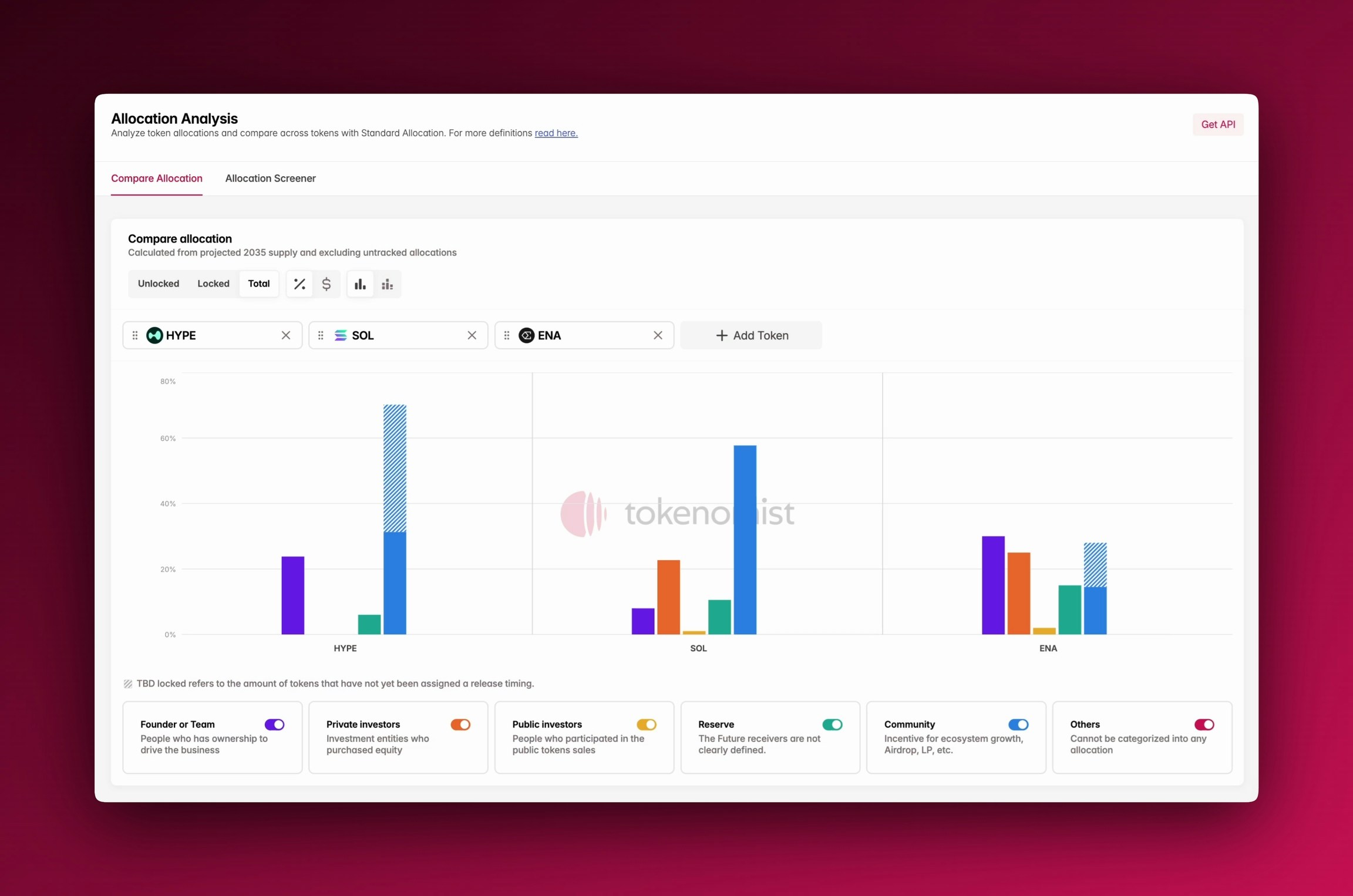
- Compare Allocation — Benchmark projects side by side using standardized allocation categories for consistent cross-project comparison.
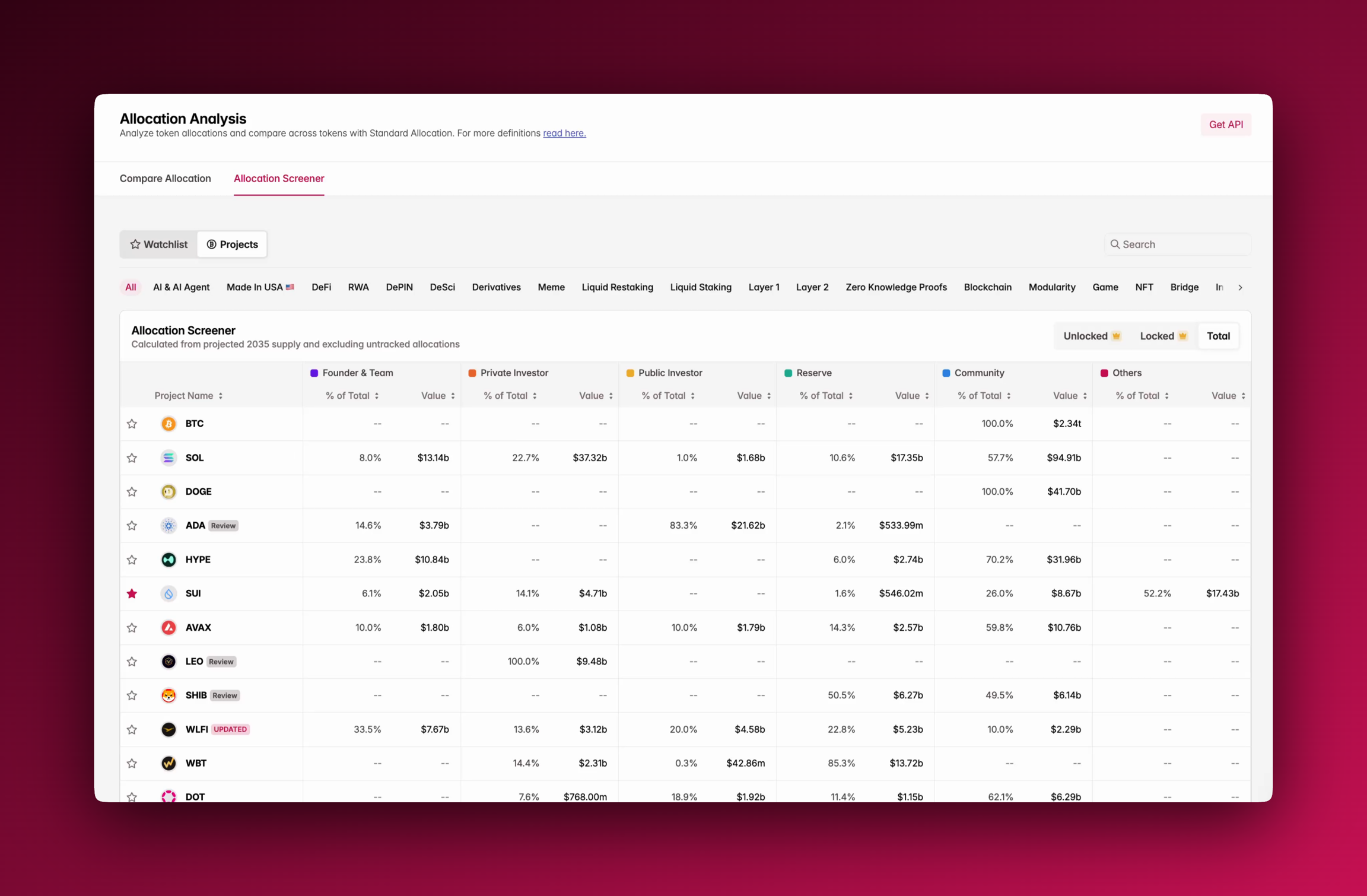
- Allocation Screener — Filter and sort the entire market by standard allocation percentages and values.
Using Standard Allocations
Token Page Token allocations will be grouped by their respective Standard Allocation giving you a more objective view of the project’s token distribution. Allocation Comparison Visually benchmark projects side-by-side to instantly compare their token distribution strategies and spot outliers.